“Why don’t you just
make the earthworm
into to your new
contractor”
Lumbricida – Earthworm
- Constantly at work
- Completely natural
- Works free of charge
The earthworm as a contractor:
The earthworm is a very useful helper in preparing the soil. As it lives below the surface and is also nocturnal, most people probably fail to realise the important contribution it makes to positive soil conditions. During its life span of three to eight years, depending on the species, it constantly burrows and digs through the soil. It not only eats rotting plant matter, but also ingests detritus, bacteria, fungal spores and numerous protozoa along with the soil. By excreting these components, the earthworm promotes the beneficial microorganisms in the soil and can thus significantly minimise those that are hostile to the soil. They are the clean insects in the dirt, so to speak.
They also drag plant remains from the surface down into the soil to decompose them and then consume them. Mulching significantly supports the feeding behaviour of the earthworm.
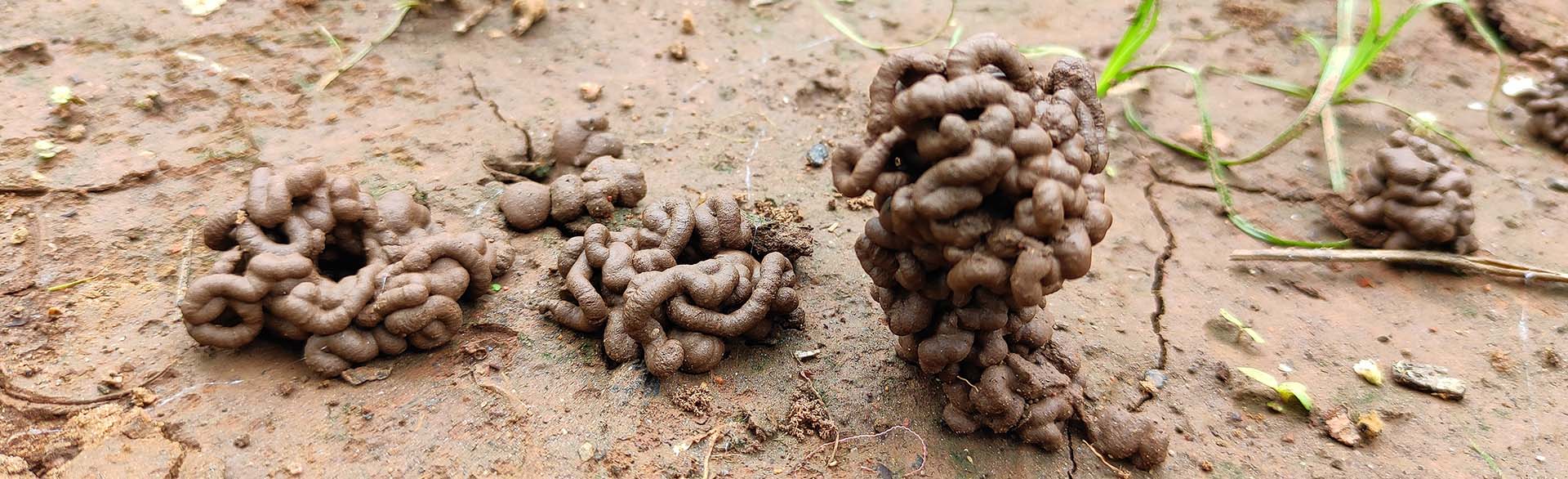
What really counts is what “comes out in the end”. Perfect fertiliser that cannot be produced any more ecologically. No energy, no effort, no packaging and no environmental impact. The best thing about it: This fertilisation method is free of charge. So anyone who creates an ideal habitat for earthworms by mulching always benefits themselves. Without exception. In this way, the earthworm becomes a free contractor.
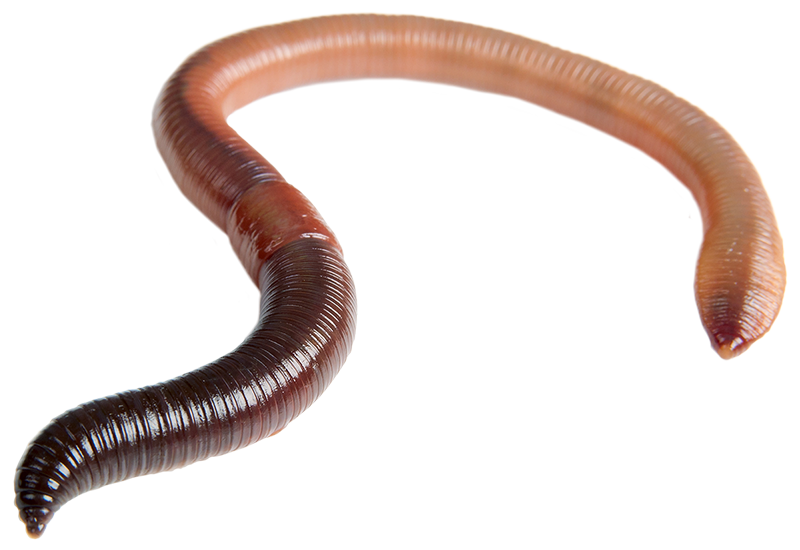
The permanent digging also has a positive effect on the soil. The tunnels and tubes that the earthworm leaves behind loosen the soil at depth. In addition, an earthworm can pull up to 20 leaves down into its tube system in one night, where it sticks them together and lets them decompose before eating and excreting them later. This creates small “compost stations” underground.
The methods commonly used in the past, e.g. hoeing or digging up beds in the garden or ploughing in agriculture, repeatedly destroy the earthworm’s habitat. A healthy biosystem, on the other hand, is maintained and promoted by mulching. Those who mulch simply let nature do its work and even work for them.
Worth knowing
Why the name earthworm?
Simply because they live in the earth, where they are a very agile and lively inhabitant. Hence “earth worm”. And they are thought to have evolved over hundreds of millions of years. In German, the species is known as the “lively worm”. That’s because it appears very lively and active. Compared to other soil dwellers, at least. It is not fully understood why earthworms come to the surface when it rains.
They produce fertiliser that is among the best in the world.
Soil biologists have discovered that a pile of earthworms is a better fertiliser than the same amount of compost. As fertilising is viewed very critically in agriculture, mulching is an environmentally friendly and profitable alternative. Perhaps even the fertilisation method of the future.